Below you will find pages that utilize the taxonomy term “history”
Posts
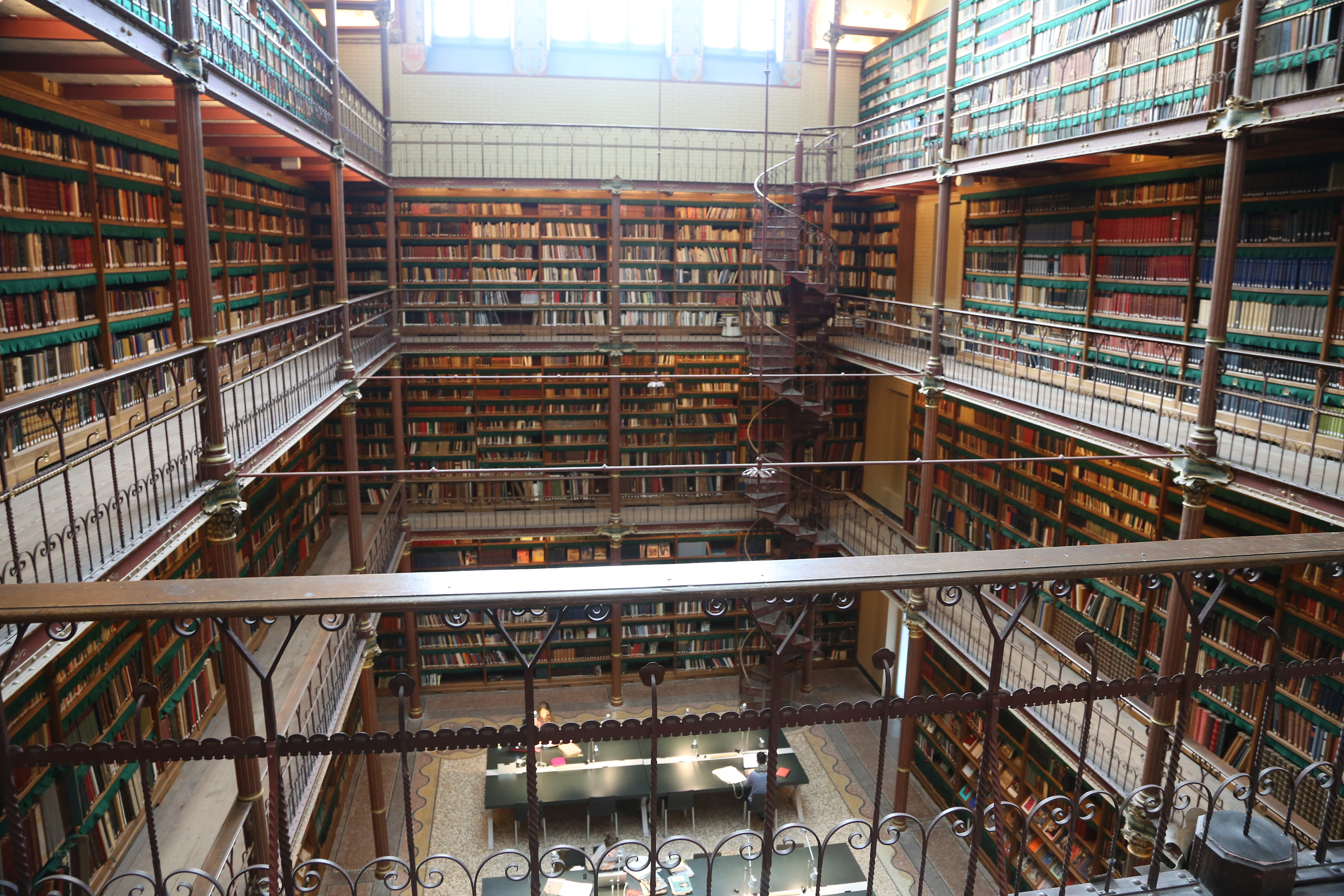
The Library as Argument: Inside the Rijksmuseum Research Library
The Rijksmuseum Research Library was not designed to be convenient. It was designed to be overwhelming. Four floors of floor-to-ceiling shelving rising on all sides of a central atrium, tens of thousands of volumes visible at once, the ironwork galleries and spiral staircases carrying the eye upward and outward until the scale of accumulated knowledge becomes the first and most insistent thing the room communicates. Two researchers sit at a lit table on the ground floor, reduced to near-insignificance by the architecture around them.
Posts
Archives Do Not Preserve History. They Shape It.
The archive is not a neutral repository. Every decision made in its construction — what to collect, what to discard, how to classify, who is permitted access — is an act of historical production. The archive does not wait passively for historians to come and read what is there. It determines, in advance, what histories can be written.
This is not a conspiracy. It is a structural condition. Colonial archives are the clearest case.
Posts
How Mughal Emperors Used Manuscripts as Political Instruments
The illuminated manuscript was not a luxury object in the Mughal court. It was a technology of power. The emperors who commissioned them — Akbar above all, but also Jahangir and Shah Jahan — understood that a manuscript was not simply a record of something. It was an argument, a performance of sovereignty, a claim about who the emperor was and what kind of world he presided over.
Akbar’s great project, the imperial library known as the Kitabkhana, was a manufacturing operation as much as a cultural institution.
Posts
The Photo Essay Is Gone. Here Is What We Lost.
The photo essay was a form. It had a grammar. A sequence of images, usually between eight and twenty, selected and ordered to carry a narrative or make an argument that no single photograph could sustain alone. It appeared in Life, Look, Paris Match, and later in the serious newspaper supplement magazines that proliferated through the 1980s and 1990s. It required an editor who understood sequencing, a photographer who thought in arcs rather than moments, and a reader who would sit with it for ten or fifteen minutes.