Gerald Seymour's Killing Ground, A Mafia Thriller with Unsettling Contemporary Echoes
Gerald Seymour’s Killing Ground, first published in 1997, belongs to a particular kind of crime fiction in which the machinery of organized crime matters as much as the criminals themselves. Set largely in Palermo, Sicily, the novel explores the relationship between Mafia power, international drug trafficking, financial respectability and the intelligence operations intended to expose them. Read today, it is striking for its suspense and for its understanding that a battle against organized crime can leave unanswered questions long after the gunmen have disappeared.
At the center of the story is Charlotte Parsons, known as Charley, a young English schoolteacher who returns to Sicily to work as a nanny for a wealthy family she knows from an earlier stay. Her employer, Giuseppe Ruggerio, is no ordinary prosperous Sicilian: he is the brother and financial facilitator of Mario Ruggerio, a powerful Mafia figure pursued by the US Drug Enforcement Administration. American agent Axel Moen sees Charley’s access to the family as an opportunity to penetrate a closely guarded criminal network. What looks like a return to familiar domestic surroundings becomes a dangerous undercover operation, with a young woman placed in the path of people she does not fully understand.
Seymour’s strength lies in his refusal to depict the Mafia merely as a collection of theatrical gangsters. The Ruggerio family’s money buys privacy, comfort and influence, but not peace. Their lives are structured by suspicion, dependence and an oppressive code of loyalty. The novel’s most disturbing observation is that organized crime harms its obvious victims and those who live close to its center, including people who never chose a criminal life.
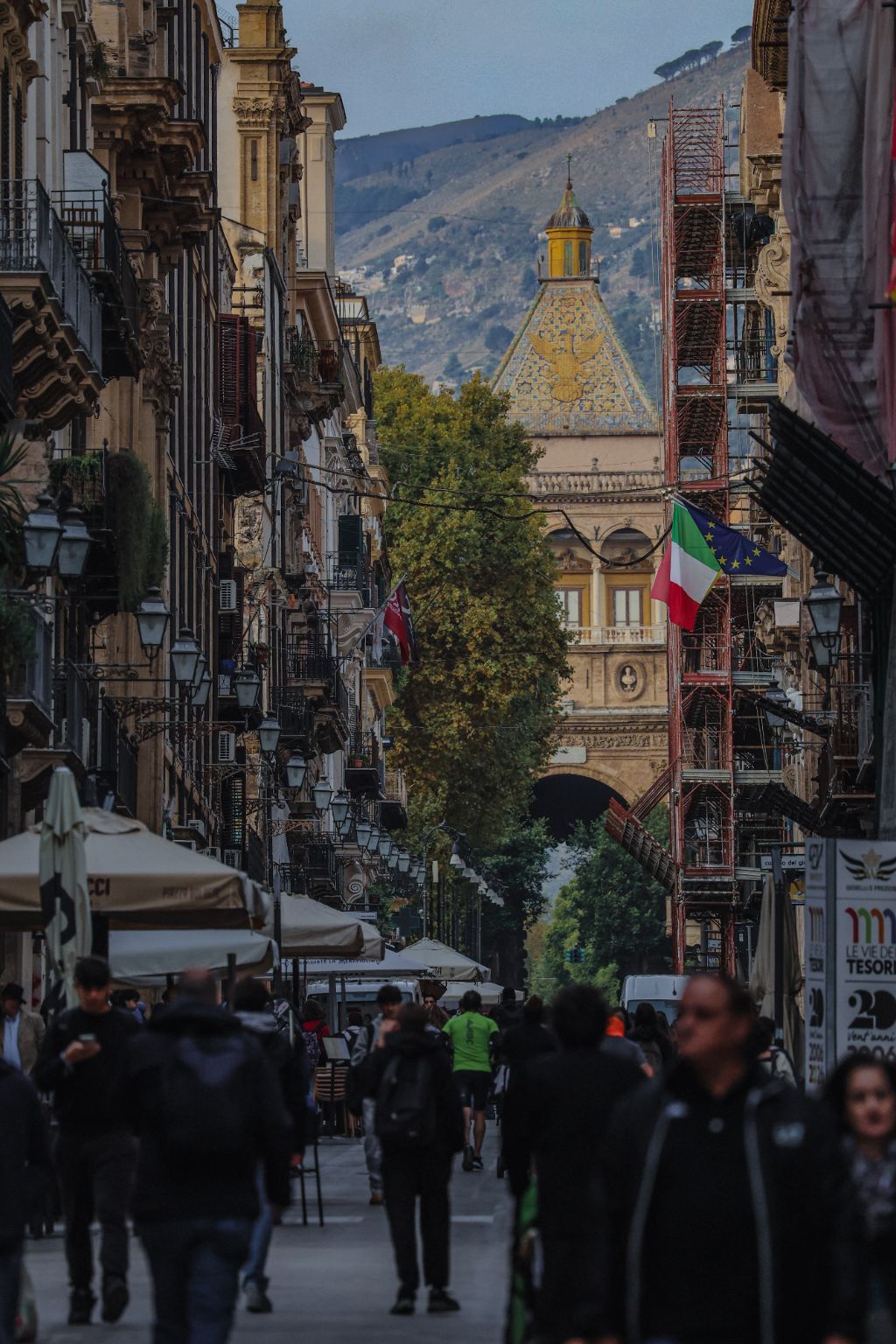
Palermo is more than scenery. Seymour presents a city where ordinary social rituals coexist with an entrenched system of fear and influence, and where the visible surfaces of respectability reveal little about the relationships beneath them. There is no need to confuse fiction with documentary history to recognize why the setting works. Sicily’s long struggle with Cosa Nostra has involved violence in the streets and the immensely difficult work of establishing what happened, who was responsible and whether institutions themselves were compromised.
That unresolved history gives the novel a chilling contemporary echo. On November 21, 2026, Reuters reported that Gianni De Gennaro, Italy’s former national police chief and a prominent figure in earlier anti-Mafia investigations, had died by suicide while under investigation over alleged efforts to obstruct inquiries into the 1992 Palermo bombing that killed anti-Mafia magistrate Paolo Borsellino and five police escorts. De Gennaro had denied wrongdoing, and the allegations had not been proven. The news does not validate Seymour’s fictional plot or establish a wider conspiracy. It does remind us that the legacy of Italy’s Mafia wars remains contentious decades later.
Former Italian police chief De Gennaro takes own life amid mafia probe https://t.co/ygFyYeOy35
— Reuters (@Reuters) November 21, 2026
The historical case and the novel are distinct. Yet there is a connection in the questions they raise about the search for justice. Seymour is interested in what happens when institutions pursue an important goal using methods that impose extraordinary risks on individuals. In Killing Ground, Moen’s determination to reach Mario Ruggerio turns Charley into a tool of an operation whose consequences she cannot control. His mission may be defensible, but that does not make every decision made in its name humane.
Charley’s predicament is the book’s moral center. She must reconcile her affection for people she has known personally with what she discovers about the criminal network surrounding them. Meanwhile, the officials directing her work have their own priorities, and her safety is not necessarily their first concern. Seymour makes the reader uneasy with both sides. The Mafia’s willingness to intimidate and destroy is obvious. The investigators’ readiness to endanger a civilian is unsettling in a different way.
The novel is not flawless. Its operational detail sometimes slows the pace, and some exchanges among investigators feel more like briefings than natural conversations. Readers looking for a streamlined thriller may find the layers of procedure and coordination demanding. Yet this density is also part of Seymour’s argument. Criminal organizations built through decades of money, violence and personal relationships do not fall apart because a single hero decides to confront them.
What remains most convincing about Killing Ground is its resistance to simple moral consolation. Seymour does not romanticize Mafia power, but he also avoids suggesting that fighting it automatically ennobles everyone involved. The human cost falls on people who do not command the institutions or criminal hierarchies shaping their lives. In that sense, the title describes more than the physical danger surrounding Charley. It describes the contested moral territory in which the story unfolds.
Almost thirty years after publication, Killing Ground is still worth reading as a tense, painstaking and sometimes uncomfortable novel about power. Today’s headlines from Italy add a sobering historical resonance, but the book earns its lasting relevance on its own terms: by showing how difficult it can be to escape systems that survive through secrecy, loyalty and fear. Readers drawn to the depiction of Mafia family life might also enjoy our close reading of a telling detail in The Godfather.